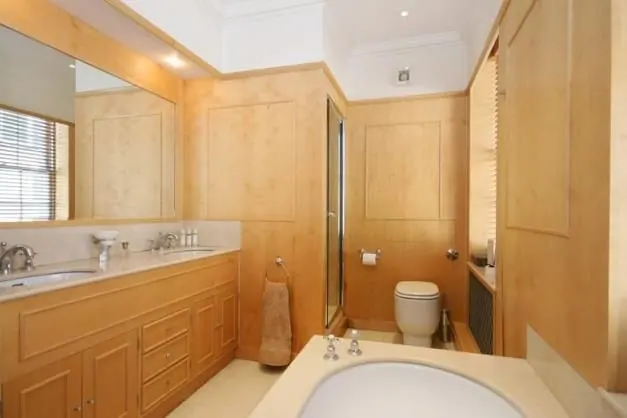
What a bathroom remodel in Charlotte includes
A bathroom remodel replaces the parts of the room that wear out or date: the shower or tub, the tile, the vanity, the toilet, the fixtures and the lighting. A full remodel takes the room back to the studs and rebuilds the wet areas properly. A lighter one keeps the layout and swaps the finishes.
We plan the layout, remove the old room, and install the tile, fixtures and finishes as one job. Common starting points are builder-grade rooms from the 1990s and 2000s, tubs nobody has used since the kids were small, and hall bathrooms where the door hits the vanity.
What sits behind the tile
Tile and grout do not keep water out on their own; grout is porous. The walls and subfloor stay dry because of the layers underneath. In a shower, that system is built in layers:
- Solid framing and blocking, so the walls do not flex and crack the grout.
- A cement board or foam board backer, never plain drywall in the wet zone.
- A waterproof membrane over the backer, lapped into the drain.
- A floor sloped toward the drain, so water never sits.
- The tile, set in thinset with full coverage, then grout and sealant at the corners and changes of plane.
Most bathroom failures start at steps two to four, years after the tile went up and looked perfect. When we take out an old shower, those layers are the first thing we look at.
Swapping the tub for a walk-in shower
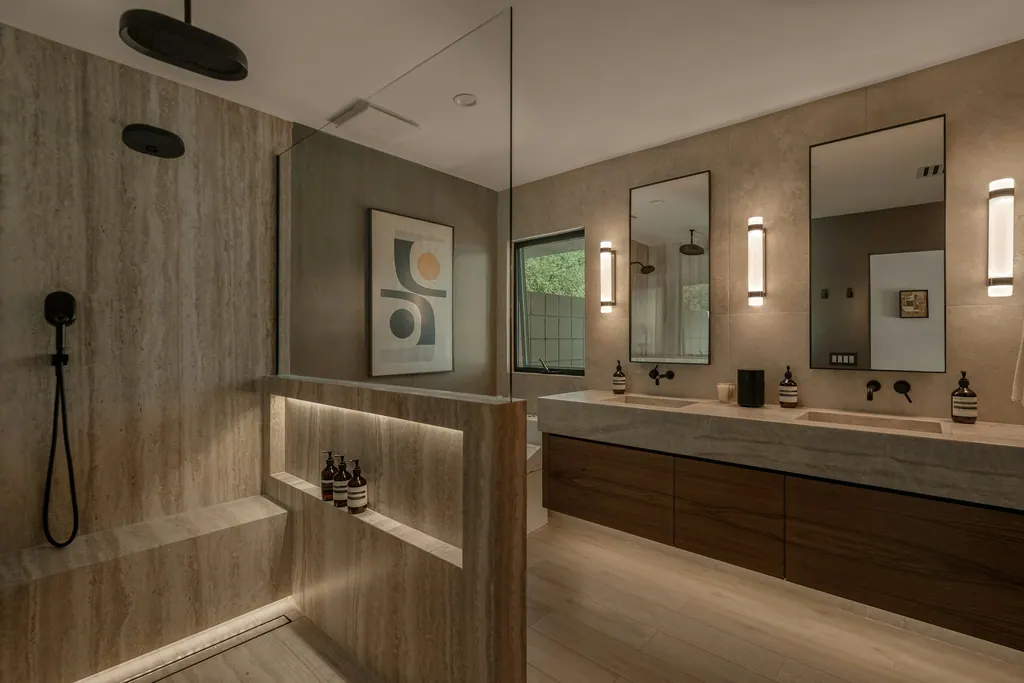
Replacing an unused tub with a tiled walk-in shower is one of the changes homeowners ask about most. It usually fits in the tub's footprint, so the drain moves a short distance rather than across the room.
Two things are worth deciding early. First, the entry: a low curb is simpler, while a curbless entry means recessing the floor so the water still runs the right way. Second, the glass: a fixed panel or a door, which changes how far the water can travel. If the tub is the only one in the house, it is also worth thinking about resale before it goes.
Refresh, tub swap or full gut
| Refresh | Tub to shower | Full gut | |
|---|---|---|---|
| What changes | Vanity, toilet, fixtures, lighting, mirror, paint | Tub out, tiled shower in, new fixtures | Everything back to the studs, layout can change |
| Tile work | Floor only, or none | Shower walls and floor | Shower, floor and often wainscot |
| Plumbing | Same locations | Drain and valve move a short way | Can move anywhere the floor allows |
| Permit likely? | Rarely | Often, because the plumbing changes | Usually |
In North Carolina, a permit is needed for home work over $40,000, and also for smaller work that changes the design of the plumbing or adds or changes wiring (N.C. Gen. Stat. 160D-1110). Permits in Mecklenburg County come from Mecklenburg County Code Enforcement.
What moves the price of a bathroom remodel
Bathrooms are small rooms with a lot of trades packed into them, so the size of the room matters less than you would think. Your price comes from the free estimate and is confirmed before any work starts. These set it:
- How much tile, and its size: large-format and small mosaic tile both take longer to set.
- Whether the plumbing moves, or stays where it is.
- The vanity, faucets and shower valve you choose.
- Glass: a shower curtain, a framed door or frameless glass.
- What is under the old floor. A soft subfloor next to the toilet is common, and it has to be fixed before new tile goes down.
Getting more out of a small hall bathroom
Plenty of Charlotte homes have a hall bathroom about five feet wide. The walls stay where they are, but a wall-hung or narrower vanity frees up floor. A recessed niche keeps bottles off the tub ledge. A pocket door ends the door-versus-vanity standoff.
Lighting matters more in a small room. One overhead fixture casts shadows on your face at the mirror, while lights at the mirror spread it evenly. Taking the tile to the ceiling makes the room read taller.
Living at home while the bathroom is out
If it is your only bathroom, say so on the first call. It changes how the job is scheduled. The days the toilet and shower are out of service can be grouped together rather than spread across the job.
Tile also needs time. Thinset and grout have to cure before the shower is used, and that wait is part of building a shower properly. Ask for the cure times in your schedule so the first shower in the new room is not a test of the grout.
When you do not need a remodel
A dripping faucet, a running toilet or one cracked tile is a repair, and our home repairs service covers it for less. Stained grout can often be cleaned or regrouted. If the room works and you like the layout, a refresh may be all it needs. We will say so at the estimate.